
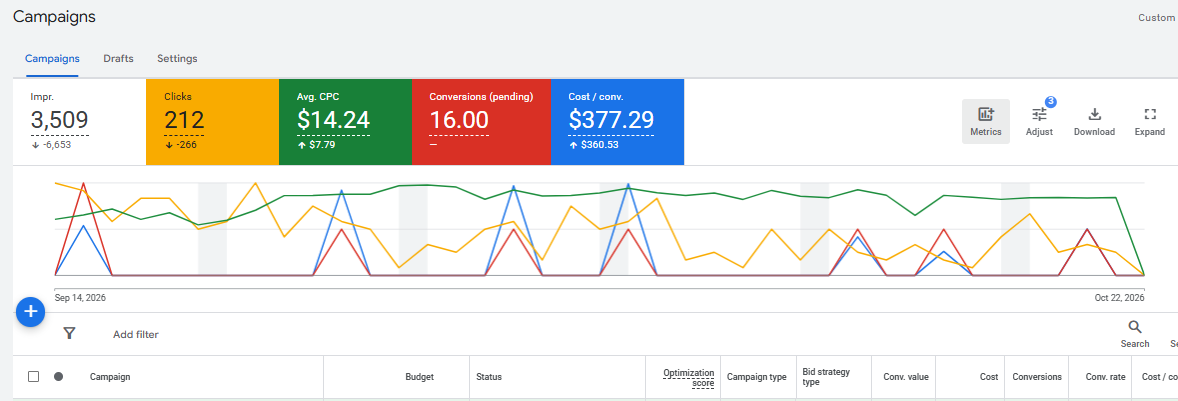
Use stages that mean the same thing to everyone.
A click is an action on a channel. An inquiry is someone getting in touch. A qualified inquiry fits the work and territory. A held conversation, an estimate, a won job and collected revenue are different outcomes. Combining them into one conversion number hides important decisions.
We map the stages your business actually uses and identify the evidence for each transition. An appointment booked in a calendar does not prove attendance. A signed estimate does not prove payment. A repeated call from the same person may not be a new opportunity.
The point is not to make the owner maintain a complicated dashboard. It is to agree a small set of useful, repeatable definitions that the team can keep current.
- What counts as a suitable inquiry?
- Who changes its stage, and based on what evidence?
- How are duplicates and existing customers handled?
Record what you know about the source. Keep the gaps.
Source information can come from a landing page, a campaign tag, an explicit customer answer or another approved system. Those signals have different levels of certainty. A customer may discover you through several channels before making contact.
We separate observed source information from interpretation. Browser restrictions, cross-device journeys and missing records can limit attribution. We do not fill those gaps by assigning every sale to the most convenient campaign.
Contact details belong in the systems that need them to respond, not in analytics event names, page URLs or general-purpose console logs. Access and retention should match the operational task.
An inquiry needs an owner, not just a notification.
Forwarding an email can alert a team, but it does not establish responsibility. We define who reviews a new inquiry, how they recognize an urgent or unsuitable request and what should happen if the first owner is unavailable.
The follow-up process should reflect how you sell. A small repair may need different information from a commercial roofing assessment. The system should preserve the original context so the customer does not have to repeat everything.
Automation can support reminders and routing, but it is not a staffed answering service. We do not promise response times, appointment availability or universal CRM compatibility. The people, permissions and operating boundaries are part of the scope.
Connect the report to the business records.
To evaluate booked work or revenue, the report needs a reliable connection to the records that establish those outcomes. We agree how jobs are identified, how cancellations are treated and whether a figure represents estimated value, contracted work, invoiced value or collected cash.
Where records are incomplete, the report should say so. An unknown outcome is more useful than a confident number built from guesses. It can point to a simple operational improvement, such as recording why an estimate was declined.
Review the stages together: the volume of suitable inquiries, the proportion receiving a response, estimates produced and outcomes recorded. A bottleneck in response or qualification may deserve attention before another acquisition channel.
Use the smallest system that supports the decision.
An engagement can begin with stage definitions, a record review and a manual handoff process. That may be enough to reveal a gap. Integrations and custom software become useful only when the operating problem warrants them.
Before connecting tools, we review the systems of record, available APIs, permissions, duplicate handling, failure recovery and data access. Existing useful tools should not be replaced simply to introduce a new stack.
You provide operating knowledge and reliable outcome records. ACS brings the mapping, implementation within the agreed scope and a review method. The goal is a process the team can actually maintain, not a report that nobody trusts.
The ad report shows inquiries. The owner needs to know which jobs followed.
Illustrative scenario: calls and forms are counted, but estimates are tracked elsewhere and there is no consistent connection between the records.
- 1
Agree a common inquiry identifier and a small set of stages.
- 2
Assign an owner and next action for each suitable inquiry.
- 3
Reconcile estimates and won work, leaving unmatched records visible.
ACS applies this approach to your services, territory and goals, then recommends the work that deserves priority.
Choose the right starting point.
- Start here when
- You receive inquiries but cannot explain quality, ownership or outcomes with confidence.
- Keep it simple when
- A shared stage definition and disciplined manual process solve the current problem.
Before you decide.
Do I need to change my CRM?
Not necessarily. We first review what the current tools can do and where the handoff breaks. Any migration or integration is separately scoped.
Can you automate every follow-up?
No. Some actions require judgment, consent or a real conversation. Automation should support the team rather than imply a response or appointment that did not happen.
Can you report revenue from ads?
Only to the extent that reliable records and matching support the connection. We distinguish won work, invoiced value and collected revenue, and keep attribution limitations visible.
What happens before paid work?
Your free growth plan identifies visible opportunities and two or three recommended priorities. We explain the reasoning and next steps, then agree on deliverables, responsibilities and fees before paid implementation.